
How our ceramic tint pricing works in Los Angeles
One of the most common questions we get at Hussle Customz is how much ceramic window tint costs. The short answer: more than regular tint, less than most people expect. The price depends on your car and the package. Ceramic tint comes in five packages:
| Package | What it covers |
|---|---|
| Two front windows | Driver and front passenger windows |
| Windshield | Clear ceramic on the windshield |
| Two front windows + windshield | Both front windows and the windshield |
| All sides + rear | All side windows plus the rear window |
| Full car | All sides + rear + windshield (glass roof available as an add-on) |
Choose your car at husslecustomz.com/tint/ to see the exact price of each package; if your car isn't listed, Jay, the owner, confirms the price. No bait-and-switch numbers that double once you walk in the door.
Ceramic tint vs regular tint: the price gap
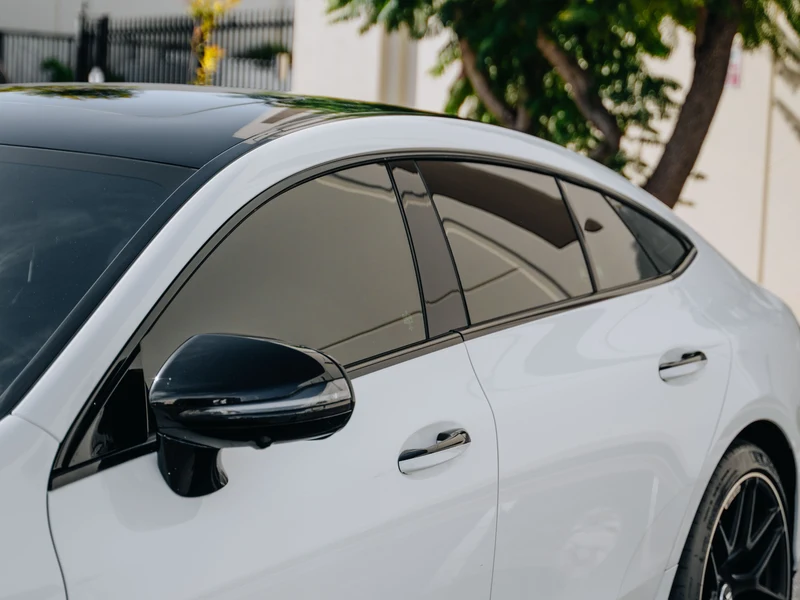
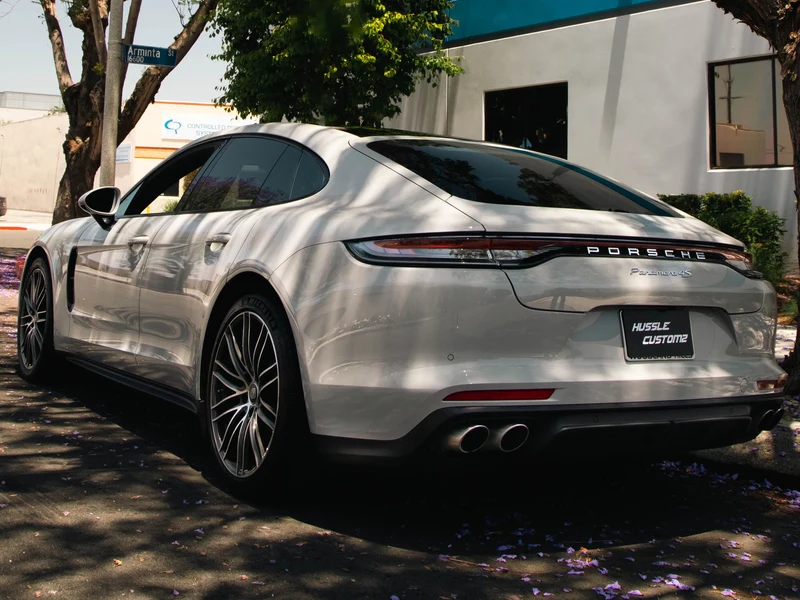
STEK ceramic tint, plotter-cut, Los Angeles. Same-week appointments.
Regular dyed window tint is the lowest-cost option at most Los Angeles shops. Ceramic tint costs more up front. That gap is real, and it is fair to ask what you get for the extra money.
Here is what the price difference buys you:
- 2-3x more heat rejection — ceramic blocks infrared radiation, dyed film mostly blocks visible light. In LA sun, the difference in cabin temperature is 15-25 degrees.
- No fading or discoloration — dyed film fades to purple in 1-3 years under California sun. Ceramic film stays true for the life of the vehicle.
- No bubbling — cheap adhesives in budget tint break down in heat, causing bubbles. Ceramic film uses advanced adhesives that hold permanently.
- No signal interference — metallic and carbon tints can block cell, GPS, and radio signals. Ceramic does not interfere with any electronics.
- Lifetime warranty — the ceramic tint we install carries a lifetime film warranty.
What drives the cost of ceramic tint
If you are comparing quotes from different shops, understanding what affects pricing helps you make an apples-to-apples comparison. The main factors that determine your ceramic tint cost:
Vehicle size and number of windows
A sedan with four side windows and a rear window is the baseline. An SUV has more glass area. A large SUV like a Suburban or Expedition has even more. Trucks with extended cabs and sliding rear windows add complexity. More glass means more film and more labor time.
Film grade and brand
Not all ceramic films are created equal. Entry-level ceramic film performs significantly better than dyed film but not as well as premium ceramic lines. Higher-grade ceramic film has better infrared rejection, better clarity, and better warranties. Premium ceramic costs more than entry-level ceramic.
Windshield inclusion
Many tint packages cover side and rear windows but do not include the windshield. Adding windshield ceramic is a separate service because the film type is different — it must be clear (70%+ VLT) to be legal in California. Windshield ceramic is one of the best upgrades for the money because the windshield is the largest glass surface and the primary source of cabin heat.
Window complexity
Some vehicles have complex window shapes, quarter windows, triangular panels, or dual-pane glass that requires more time and precision. Vehicles with unusual glass configurations may cost more than standard models of the same size class.
Why cheap tint costs more long-term
This is the part most people skip when they are comparing quotes, and it is the most important part of the cost equation. Budget dyed tint has a lifespan problem in Southern California.
Here is how it adds up over five years:
| Scenario | Year 1 | Year 3 | Year 5 | 5-Year Total |
|---|---|---|---|---|
| Cheap dyed tint | Lowest cost | Pay again (redo + removal) | Pay again (redo + removal) | Repeated installs and removals |
| Ceramic tint | Higher cost | Nothing | Nothing | One install |
That is not a hypothetical. Dyed film in Los Angeles sun visibly fades and loses performance within one to three years. We see it constantly — customers come in asking for ceramic tint after their second or third dyed installation failed. They have spent more on repeated cheap tint than ceramic would have cost once.
Beyond the direct cost, consider what you get during those five years. With ceramic, you have elite heat rejection from day one through year five. With dyed tint, you have declining performance that is effectively gone by year two or three, at which point you are paying again or driving with a faded, bubbling mess on your windows.
How to get the best value on ceramic tint
A few practical tips for getting the most out of your tint investment:
- Do all windows at once — the full car package covers all sides, the rear, and the windshield in one appointment. Choose your car at husslecustomz.com/tint/ to see the exact price of each package; if your car isn't listed, Jay, the owner, confirms the price.
- Add the windshield — windshield ceramic is the single highest-impact upgrade. The windshield is the largest glass surface and lets in the most heat. If you are already tinting the sides and rear, adding the windshield is a no-brainer.
- Skip the middle ground — carbon or metallic tint is mid-range in cost but does not perform like ceramic and can interfere with electronics. If you are going to spend more than budget dyed tint, go all the way to ceramic. The gap between carbon and ceramic is smaller than the performance difference.
- Ask about the actual film brand — "ceramic tint" is a category, not a brand. Make sure your installer is using a name-brand ceramic film with a manufacturer warranty. Unbranded "ceramic" film may not deliver the performance you are paying for.
Frequently Asked Questions
How much does ceramic tint cost for a sedan in Los Angeles?
The price depends on your car and the package. Choose your car at husslecustomz.com/tint/ to see the exact price of each package; if your car isn't listed, Jay, the owner, confirms the price. The all sides + rear package covers all side and rear windows with high-quality ceramic film; the full car package adds the windshield.
Is ceramic tint more expensive than regular tint?
Yes. Regular dyed tint costs less up front than ceramic. However, ceramic lasts significantly longer, performs dramatically better at heat rejection, and does not fade or bubble — often making it cheaper over the life of the vehicle when you factor in replacement costs for dyed film.
Why is ceramic tint so expensive?
Ceramic tint uses nano-ceramic technology that costs more to manufacture than dyed or metallic films. The raw material is more expensive, and the film requires more precision during installation. Our ceramic tint also comes with a lifetime film warranty. You are paying for superior heat rejection, 99% UV blocking, no signal interference, and a film that will not fade, bubble, or need replacement.
How much does windshield ceramic tint cost?
The price of windshield ceramic film depends on your car. Choose your car at husslecustomz.com/tint/ to see the exact price of each package; if your car isn't listed, Jay, the owner, confirms the price. This is clear ceramic film that blocks 40-60% of infrared heat coming through the windshield without affecting visibility. It is legal in California (70%+ VLT) and is one of the highest-impact upgrades for cabin comfort relative to its cost.
Does cheap window tint cost more in the long run?
Almost always, in Southern California. Cheap dyed tint fades to purple and loses heat rejection within one to three years under constant sun exposure. Replacing it means paying again, plus removal fees, each time. After two replacement cycles, you have spent more than ceramic tint would have cost once — and you never had the same level of heat rejection performance.
Get a quote for your vehicle at our Los Angeles studio.